Agility in Pharma Doesn’t Fail Because of Regulation



In pharma, QC and QA generate vast amounts of data but very little of it drives action. Reports are produced, metrics are reviewed, yet decisions remain slow and disconnected from what is actually happening in the process. Agility does not fail because teams lack data; it fails because data is not translated into insights and insights do not trigger action. This insight explores how QC and QA can move from reporting to learning and why closing the loop between data, insight, and action is essential for real quality improvement.

It Fails Because of Control Illusions in QC & QA
In many pharmaceutical companies, agility is officially promoted but systematically blocked in QC and QA. Processes carry modern labels, yet the underlying logic remains unchanged. Decisions are made top down, deviations are escalated, and approvals move through multiple hierarchy levels. The result is not quality assurance but a slow and rigid control system.
QC and QA operate at the center of daily reality. OOS, OOT, deviations, CAPAs, re tests and bottlenecks define the work. Yet planning is still driven by assumptions rather than real process data. Organizations believe they can define lead times, testing volumes and resource needs months in advance despite daily operational evidence proving otherwise. Deviations are treated as exceptions instead of signals of systemic instability.
This pseudo agility is particularly dangerous in regulated environments. It creates a sense of safety on paper while producing operational blindness. Quality is defended through checklists rather than improved through learning cycles. Teams spend more time justifying outcomes than understanding root causes. Decisions arrive late not because data is missing but because authority is layered.
This is exactly where q_alizer sets in.
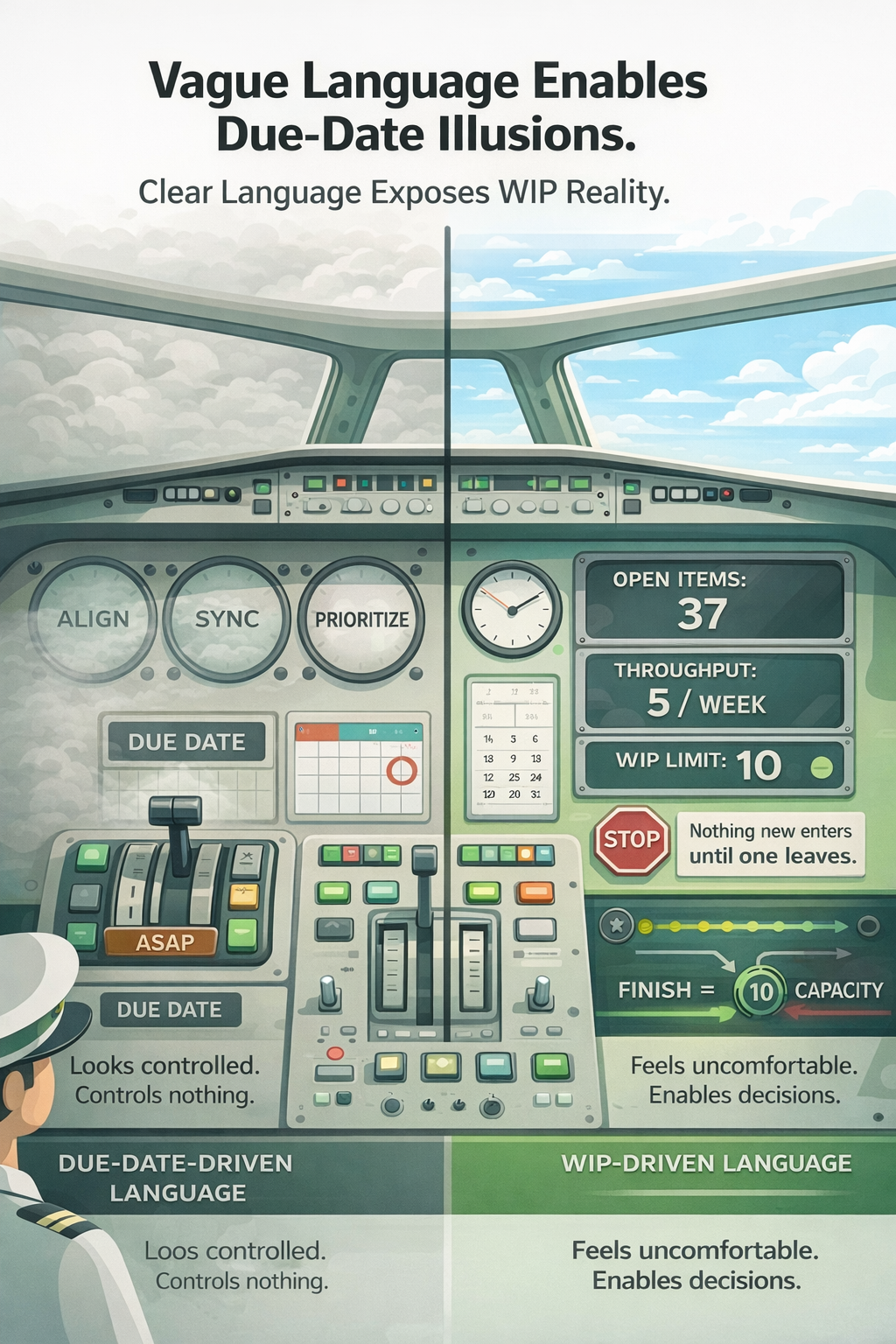
Not by introducing new processes but by making existing ones transparent. q_alizer exposes how QC and QA work actually flows. Lead times, queues, review backlogs, rework and structural bottlenecks become visible. Not as management reporting but as an operational steering foundation for the teams themselves.
q_alizer replaces planning illusions with continuous data feedback. Assumptions become testable. Deviations become immediately visible. Long term forecasts give way to short learning cycles where small adjustments are measured against real outcomes. QC and QA stop managing work reactively through escalations and start steering proactively using reliable metrics.
True agility in QC and QA does not mean less control. It means better control.
q_alizer embeds this principle at the system level. Learning happens through measurement, decisions are grounded in real process data and feedback flows directly into planning and standards. Each improvement becomes the new baseline until the next insight emerges.
The challenge is not methodological, it is systemic. q_alizer creates the conditions for QC and QA to function as learning systems that are fully compliant, economically sound and operationally effective.
Agility in pharma is not a trend. With q_alizer, it becomes a manageable reality.

Get in contact
Intrigued and ready to learn more about how to better fly your plane?
Cool, the team is waiting to give you a demo of how easy your life will be with q_alizer™!
We’d love to talk with you!
Chief Commercial Officer (CCO)
sales@q-alizer.com
+41 76 576 2591
Paul on LinkedIn